
Ready-to-use Reagents for H5N1 Influenza Research
Research on emerging influenza strains presents challenges that may put this important work out of your reach. Attenuated influenza strains can be difficult to access and time-consuming to bank. BSL-3 facilities are unavailable to many.
But did you know there’s an easier way to get started with microneutralization and HAI assays? With our non-replicative, BSL-2 safe reagents, your team can be running H5N1 avian influenza assays in as little as 10 days.

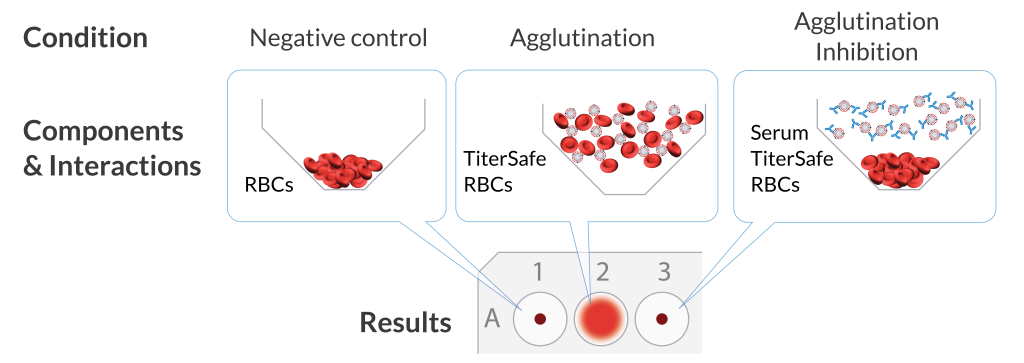
For your influenza research needs, we offer two easy-to-use reagents for fast results: Reporter Virus Particles (RVPs) for viral neutralization and infectivity assays, and TiterSafe™ for HAI assays. Both are available strain-matched to a variety of H5N1 and other emerging strains, and they’re ready to ship.
Influenza TiterSafe Particles for HAI Assays
Influenza Reporter Virus Particles for Microneutralization Assays
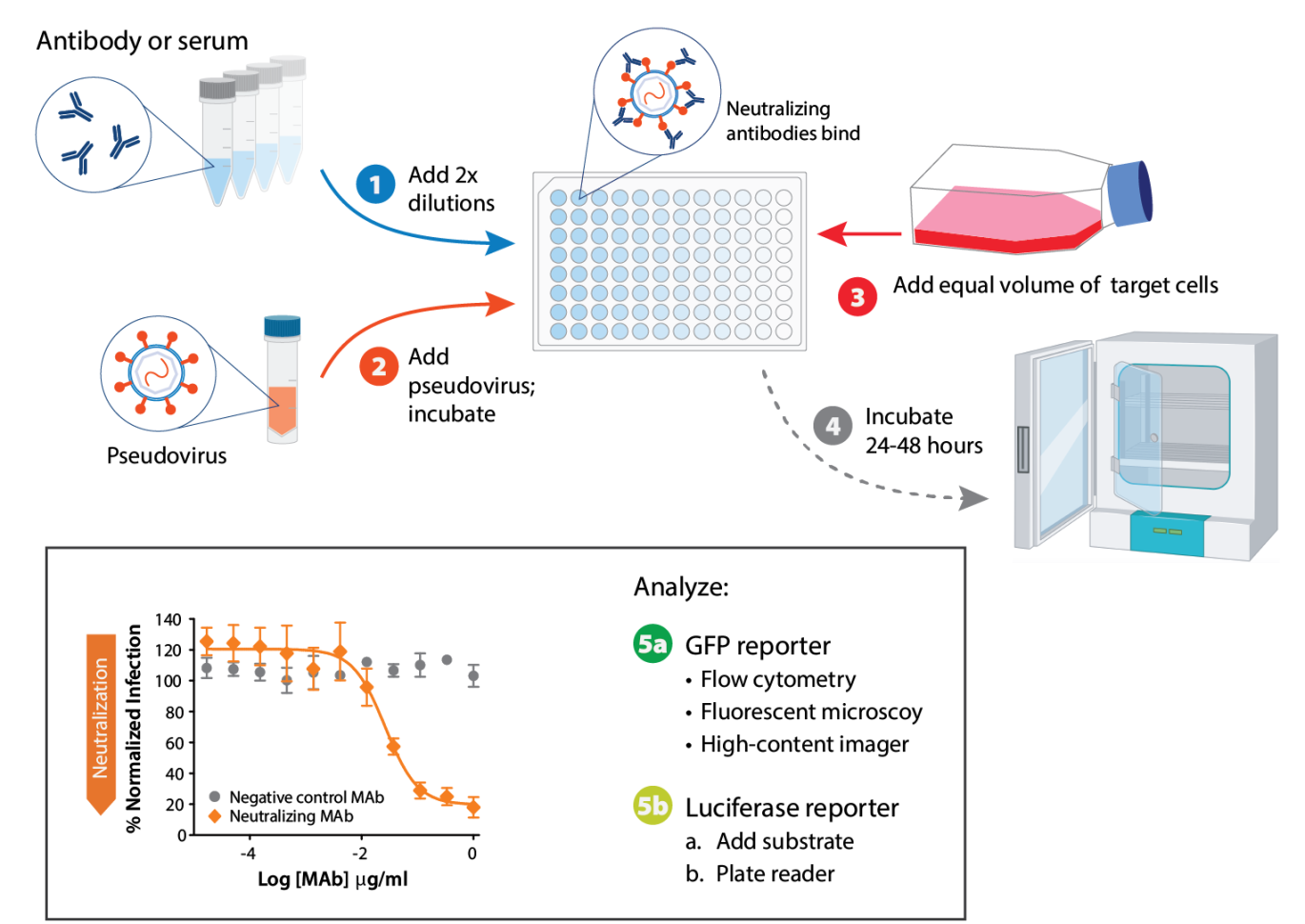
Influenza pseudovirus neutralization assay at a glance. RVPs are available with a GFP or luciferase reporter. Reporter expression indicates when cells have been infected successfully. GFP read-out can be assessed by microscopy or flow cytometry, and luciferase readout can be assessed by plate reader.
Emerging Influenza Strain Product Catalog
| Influenza A Subtype | Strain Information | RVP Catalog No. | Titersafe Catalog No. |
|---|---|---|---|
| H5N1 | Texas/37/2024 | RVP-1218 | HAP-1218 |
| H5N1 | dairy_cattle/Texas/24-008749-003-original/2024 | RVP-1217 | HAP-1217 |
| H5N1 | American Wigeon/SC/22-000345-001/2021 | RVP-1214 | HAP-1214 |
| H5N8 | Astrakhan/3212/2020 | RVP-1209 | – |
| H7N9 | Guangdong/17SF003/2016 | RVP-1210 | – |
| H7N9 | Suzhou/3/2013 | RVP-1204 | – |
| H5N1 | turkey/Turkey/1/2005 | RVP-1208 | – |
| H5N1 | Indonesia/5/05 | RVP-1201 | – |
| H5N1 | Vietnam/1194/2004 | RVP-1207* | – |
| H5N1 | Vietnam/1203/2004 | RVP-1205 | HAP-1205 |
*Available in GFP only
Contact Us
Frequently Asked Questions